

🧠 How Meditation Helps Heal Migraines
Introduction
Migraine is a neurological condition that causes intense headaches, often accompanied by nausea, sensitivity to light, and visual disturbances. While medications are commonly used, many people are turning to natural approaches like meditation. Scientific research suggests that meditation does not “cure” migraines completely, but it can significantly reduce their frequency, severity, and overall impact on life.

What is Meditation?
Meditation—especially mindfulness meditation—is a practice that involves focusing your attention on the present moment without judgment. It trains the mind to stay calm, aware, and emotionally balanced.
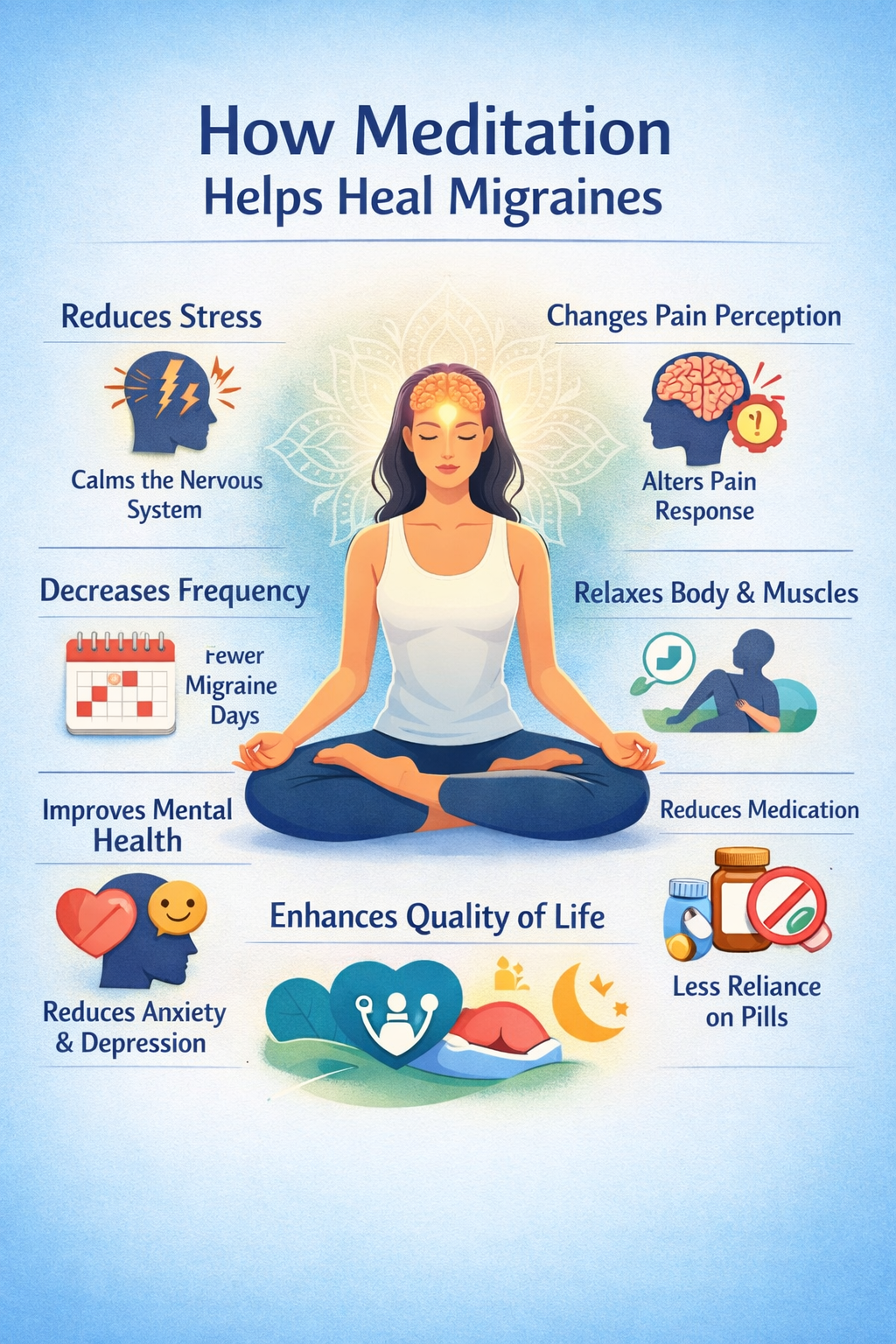
How Meditation Heals Migraines
1. Reduces Stress (Main Trigger)
Stress is one of the biggest causes of migraines. Meditation helps calm the nervous system and reduces stress levels.
- It lowers emotional reactivity
- Promotes relaxation
- Improves overall mental well-being
Studies show that reducing stress can directly reduce migraine attacks.
2. Changes Pain Perception
Meditation does not always remove pain, but it changes how the brain processes it.
- Helps people observe pain without panic
- Reduces the “suffering” linked to pain
- Improves emotional control over discomfort
This leads to a decrease in how intense migraines feel.
3. Decreases Frequency of Migraines
Research shows that regular meditation can reduce how often migraines occur.
- Some studies found fewer migraine days per month
- Intensive meditation reduced migraine frequency by about 2–3 days monthly In some cases, people experienced up to 50% fewer headaches
4. Relaxes the Body and Muscles
Meditation involves deep breathing and relaxation, which helps:
- Reduce muscle tension
- Improve blood circulation
- Calm the nervous system
This physical relaxation can ease headache symptoms.
5. Improves Mental Health
Migraines are often linked with anxiety and depression. Meditation helps by:
- Reducing anxiety
- Improving mood
- Increasing emotional stability
Better mental health leads to fewer migraine triggers.
6. Reduces Dependence on Medication
With regular practice, some people rely less on painkillers because meditation helps manage symptoms naturally.
7. Improves Overall Quality of Life
Even when migraines are not fully eliminated, meditation:
- Reduces disability caused by migraines
- Improves sleep and daily functioning
- Enhances coping ability
Clinical studies show improvements in quality of life and reduced migraine burden. (PubMed)
How Long Does It Take to Work?
Meditation is not an instant cure.
- Benefits may begin after 2–3 weeks
- Regular daily practice is important
- Long-term practice gives better results
Simple Meditation Technique for Migraines
- Sit in a quiet place
- Close your eyes
- Focus on your breathing
- Inhale slowly for 4 seconds
- Exhale slowly for 6 seconds
- Do this for 10–15 minutes daily
Conclusion
Meditation is a powerful, natural method for managing migraines. It works by reducing stress, calming the brain, changing pain perception, and improving emotional health. While it may not completely cure migraines, it can significantly reduce their frequency and severity, making life more manageable.