
Introduction
The gut-brain axis is a fascinating concept linking our digestive system and mental health. Modern science highlights the role of gut microbiota in mood regulation, cognition, and stress response. Ayurveda emphasizes balanced digestion (Agni) and detoxification (Ama) for mental clarity. Combining psychobiotics with Ayurvedic practices provides a holistic pathway to health.
1. Understanding the Gut-Brain Axis
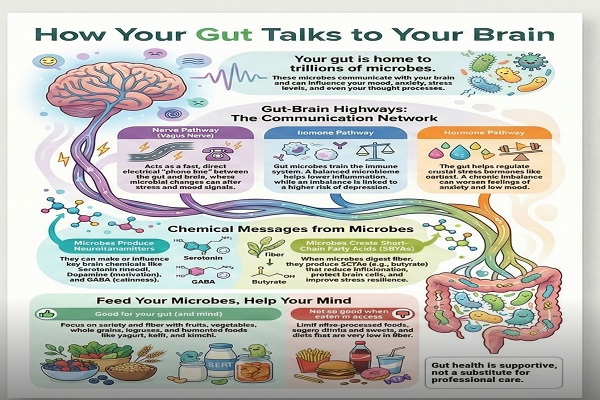
The gut-brain axis is a bidirectional communication network involving:
- The central nervous system (CNS)
- The enteric nervous system (ENS)
- Hormonal signals
- Immune system
- Gut microbiota
Key Insight: A healthy gut reduces anxiety, improves cognition, and boosts immunity.
2. What Are Psychobiotics?
Psychobiotics are probiotics that benefit mental health.
Benefits:
- Reduce anxiety and stress
- Improve mood
- Enhance cognitive function
Popular strains: Lactobacillus rhamnosus, Bifidobacterium longum, Lactobacillus helveticus
3. Ayurveda’s Perspective on Gut and Mind
Ayurveda considers digestion the cornerstone of health:
- Agni (Digestive Fire): Proper digestion supports mental health
- Ama (Toxins): Undigested food causes mental imbalance
- Prakriti (Constitution): Vata, Pitta, Kapha influence digestion and mood
4. Ayurvedic Herbs & Foods Supporting the Gut-Brain Axis
- Triphala: Enhances digestion and detoxifies
- Ashwagandha: Reduces stress and balances Vata
- Brahmi & Shankhpushpi: Boost cognition and calm mind
- Fermented foods: Yogurt, Kanji, fermented vegetables
- Ginger, turmeric, fennel: Strengthen Agni, reduce inflammation
5. Lifestyle Tips for a Healthy Gut-Brain Axis
- Eat fresh, seasonal, and lightly cooked foods
- Avoid processed foods and sugar
- Practice meditation and yoga
- Maintain a regular sleep pattern
- Include daily probiotics for gut support
Conclusion
Integrating psychobiotics with Ayurvedic wisdom strengthens both gut and mind. By nurturing the gut, mental wellness is naturally achieved. This holistic approach supports a balanced, healthy lifestyle.