
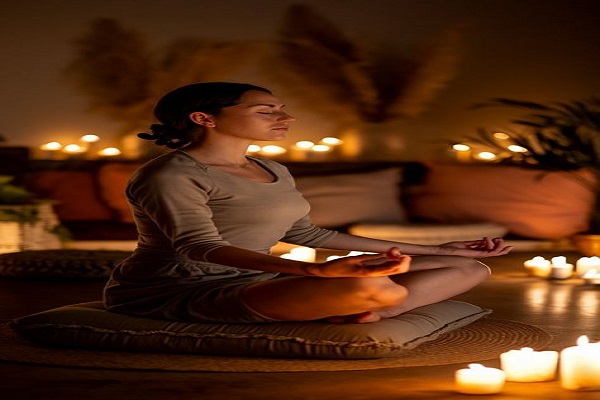
Self Meditation: A Complete Guide to Inner Peace and Self-Healing
Introduction


Self meditation is a simple yet powerful practice that allows you to reconnect with yourself. It does not require expensive equipment, special locations, or advanced skills. All you need is a few minutes, a quiet space, and a willingness to turn your attention inward.
Through regular self meditation, you can develop greater awareness, emotional balance, mental clarity, and inner peace.
What Is Self Meditation?
Self meditation is the practice of consciously observing your thoughts, emotions, sensations, and breath without judgment.
Rather than trying to control the mind, meditation teaches us to observe it calmly.
The goal is not to stop thinking completely but to become aware of our inner experiences and create a healthier relationship with them.
Benefits of Self Meditation
1. Reduces Stress
Meditation activates the body’s relaxation response and helps lower stress levels.
2. Improves Emotional Balance
Regular meditation helps individuals respond more calmly to challenging situations.
3. Enhances Focus and Concentration
Meditation trains the mind to stay present and attentive.
4. Supports Better Sleep
A calm mind naturally promotes deeper and more restorative sleep.
5. Encourages Self-Awareness
Meditation helps you understand your thoughts, emotions, and habits more clearly.
6. Promotes Inner Peace
With regular practice, many people experience a greater sense of contentment and calmness.
How to Practice Self Meditation
Step 1: Choose a Quiet Space
Find a comfortable place where you are unlikely to be disturbed.
Step 2: Sit Comfortably
Sit on a chair, cushion, or mat while keeping your spine relaxed but upright.
Step 3: Close Your Eyes
Gently close your eyes and allow your body to relax.
Step 4: Focus on Your Breath
Notice the natural rhythm of your breathing.
Step 5: Observe Without Judgment
Thoughts will arise naturally. Instead of fighting them, simply observe them and return your attention to your breath.
Step 6: Continue for 5–20 Minutes
Start small and gradually increase your meditation time.
Simple Self Meditation Technique
- Sit comfortably.
- Close your eyes.
- Take three deep breaths.
- Focus on the sensation of breathing.
- Observe thoughts without reacting.
- Bring attention back to the breath.
- Continue for 10 minutes.
Best Time for Self Meditation
Morning Meditation
Benefits:
- Mental clarity
- Positive mindset
- Increased focus
Evening Meditation
Benefits:
- Stress reduction
- Emotional release
- Better sleep
Self Meditation and Ayurveda
According to Ayurveda, meditation helps balance the doshas:
Vata Balance
Meditation calms anxiety, restlessness, and excessive thinking.
Pitta Balance
Meditation reduces irritability, frustration, and mental intensity.
Kapha Balance
Meditation encourages alertness and motivation.
Common Challenges During Meditation
“My Mind Won’t Stop Thinking”
This is completely normal. Meditation is about awareness, not perfection.
“I Don’t Have Time”
Even five minutes daily can be beneficial.
“I Get Distracted”
Simply notice the distraction and gently return your focus.
Tips for Building a Consistent Practice
- Meditate at the same time daily.
- Create a peaceful meditation space.
- Start with short sessions.
- Be patient with yourself.
- Focus on consistency rather than duration.
A Simple Self Meditation Affirmation
You may silently repeat:
“I am calm.”
“I am present.”
“I am safe.”
“I am at peace.”
Allow these words to settle naturally into your awareness.
Conclusion
Self meditation is one of the simplest and most effective tools for improving mental, emotional, and spiritual well-being. It requires no special equipment and can be practiced by anyone, anywhere.
By spending a few minutes each day in quiet awareness, you can cultivate greater peace, clarity, resilience, and self-understanding.
The journey inward often becomes the path toward lasting wellness and balance. 🌿🧘♀️✨